Lesson 4: Precision and Teamwork
"Stay on the line and trust the map"
| Time | 70 minutes |
| Space | Schoolyard, local park, or forested area with an orienteering map |
| Materials | Line-O maps (1 per student or pair), Orienteering maps with course (1 per pair for Star Relay), All-checkpoints map with checkpoint locations, Checkpoints (orienteering flags, streamers, or cones), Pens or pencils, Map legend (poster or handout), 2 sets of symbol cards (one per team), 2 sets of text cards (one per team), Orienteering flags, Regular course maps (1 per pair) |
| Setup | Place checkpoints for Line-O along the line route; place checkpoints for Star Relay according to the all-checkpoints map |
| Vocabulary | Precision, Leg |
Activities
warm-up
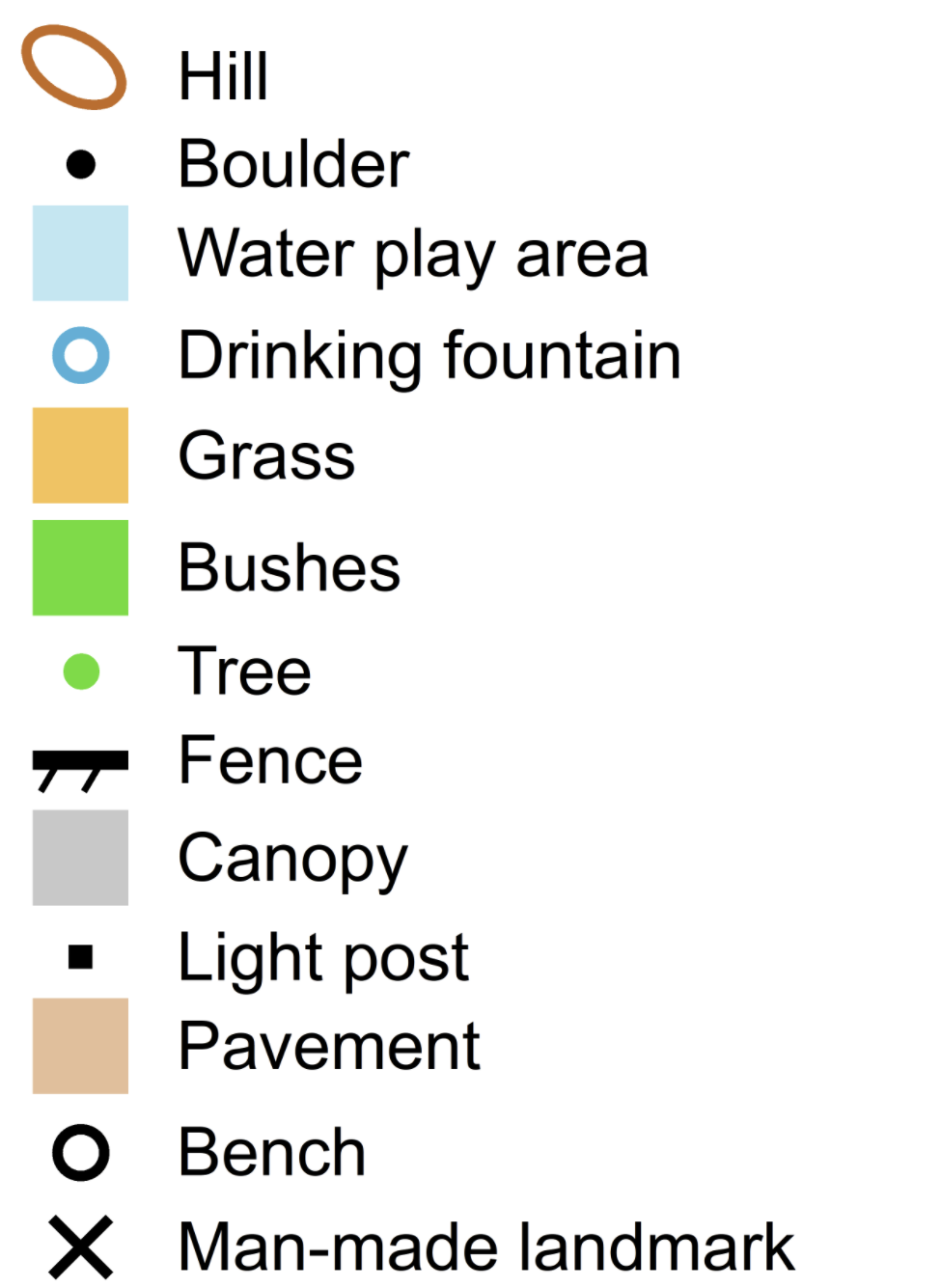
Symbol Relay
Team relay to identify and locate map symbols.
core
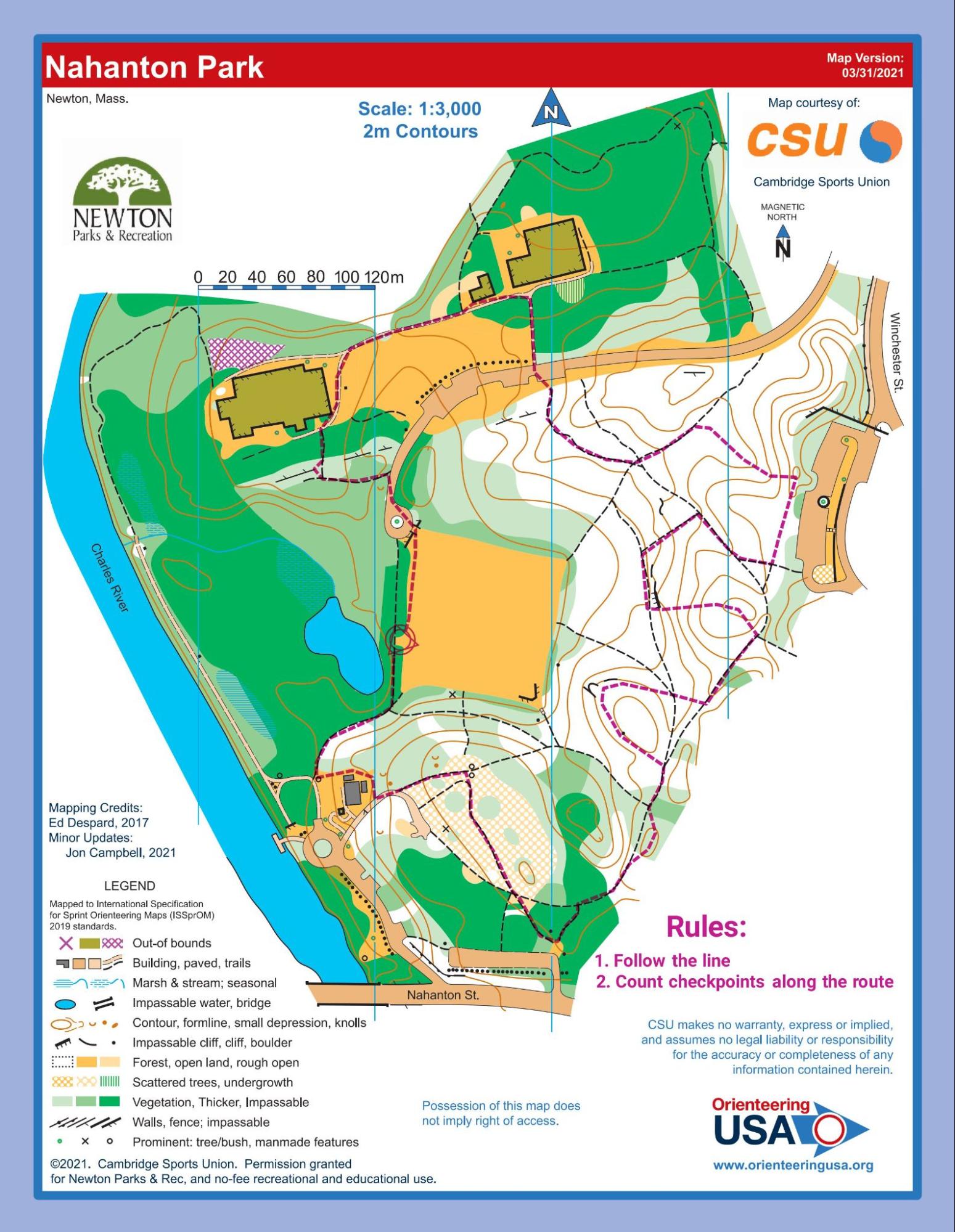
Line-O
Follow a line on the map and find unmarked checkpoints along the way.
core
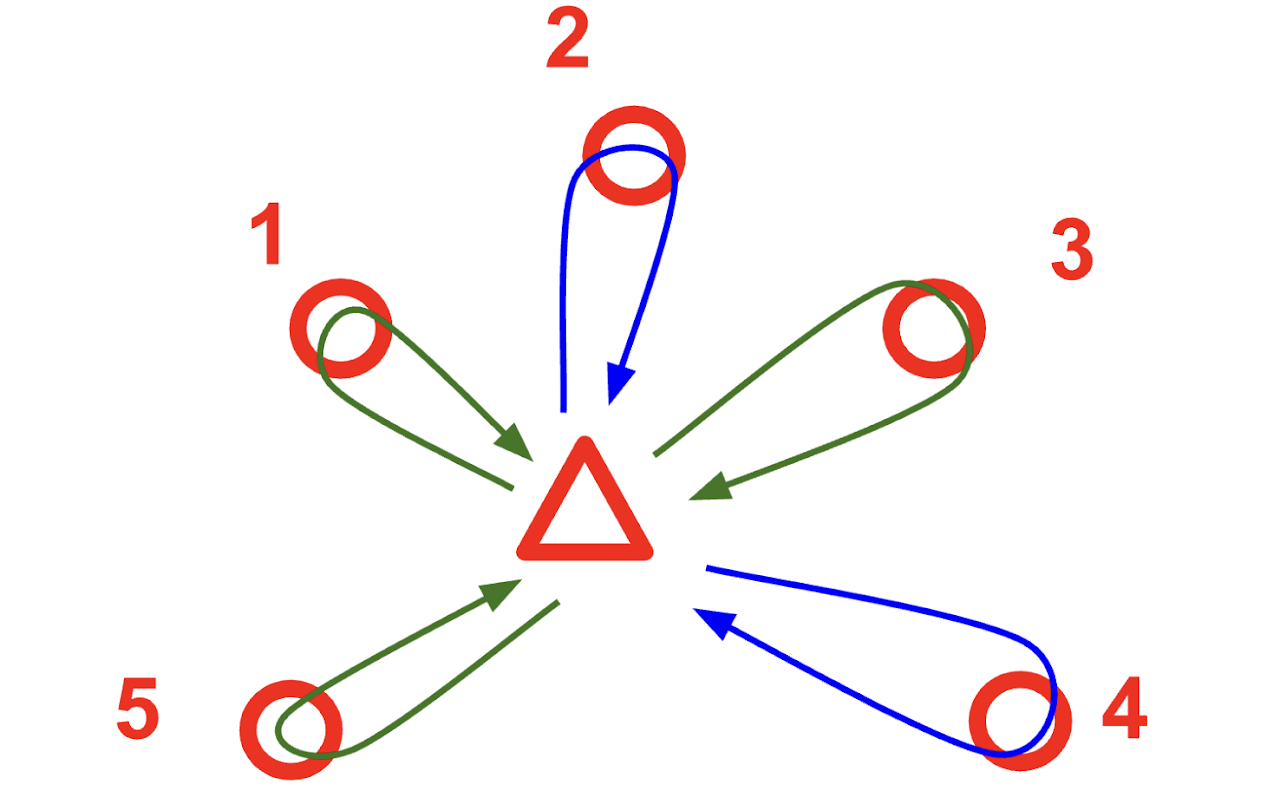
Star Relay
Partner relay with out-and-back format between checkpoints.
Goals
Orienteering Goals
- Follow a route on the map with precision
- Relate terrain features to the map while moving
- Describe checkpoint locations accurately
- Work cooperatively with a partner, giving and receiving feedback
Delivery
- Safety review (5 min): review boundaries and gathering signal. Remind campers: it is OK to get lost. Everyone gets lost sometimes. If you are ever completely turned around, stop, look at your map, and try to identify a feature you can see. If that does not work, use your safety bearing or ask someone nearby for help.
- Symbol Relay (10 min): quick warm-up relay to review map symbols from Session 1. Teams race to match symbols to features. This time, include additional symbols beyond those on the camp map (symbols they might see at other orienteering venues). This extends their symbol vocabulary while experienced campers help newcomers with the basics. If any campers are attending for the first time, the relay doubles as a crash course on symbols.
- Line-O (25 min): pairs follow a line drawn on the map through the terrain. Keep the map oriented as you move. Watch for unmarked checkpoints placed at features along the line. After finishing, mark the checkpoint locations on your map. For campers who need more support, a leader can walk the Line-O route with them as a guided Map Walk.
- Star Relay (25 min): partner relay. One partner runs to a checkpoint and returns to the start; the other partner runs to the next checkpoint. Partners confirm the correct checkpoint by checking the reported code. Progress to "Move the Object" or "Leave the Clothing" variations if time allows (see the Star Relay activity page for details).
- Wrap-up (5 min): compare Line-O maps against the all-checkpoints map. Discuss precision and teamwork.
Reflection
- How did you stay on the line? Were there parts where you went off it?
- What helped you navigate most accurately during Line-O?
- How did you use the time while your partner was running during Star Relay?
- Did your partner visit the correct checkpoints? How did you check?
Extensions
- Line-O solo instead of in pairs
- Star Relay with the map left at the start (navigate from memory)
- Compass Spider: same setup as Star Relay, but sections of the map between checkpoints are whited out. Runners must use a compass bearing to navigate there and back. You can mix whited-out and regular checkpoints in the same course
- Add timing for a competitive Star Relay