Capture the Flag-O — Activity
Two teams steal flags from places shown on a map in enemy territory
| Time | 30-60 minutes |
|---|---|
| Space | Gym, schoolyard, or local park |
| Materials | Checkpoint flags, Maps (1 per player or pair) |
| Vocabulary | Flag, Territory |
"Today we will play capture the flag with a map"
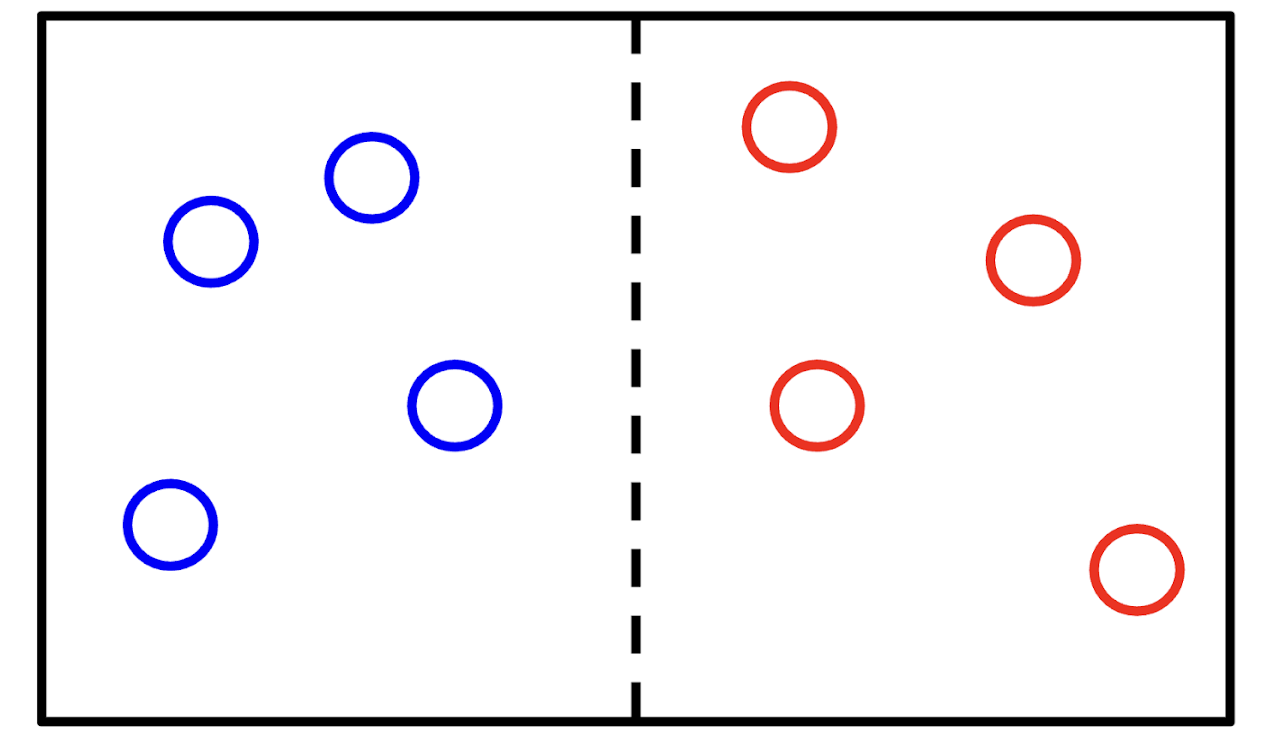
Capture the Flag-O is the classic game with a map at its heart. The field is split into two territories. Each team places flags at the locations marked on the map in its own territory, then tries to steal all of the other team's flags. To find enemy flags, you have to read the map; to defend your own, you have to know where they are.
Because the teams place their own flags using the map, setup itself is a map-reading exercise. The chase layer adds speed, strategy, and teamwork on top.
- Learning Goals
- How to Run It
- Reflection
- Vocabulary
Learning Goals
Students completing this activity will be able to:
- Read a map to place and find flags at mapped locations
- Apply strategies and tactics in chasing activities
- Demonstrate locomotor skills while chasing, fleeing, and dodging
- Participate, learn, and follow the rules of a team game
How to Run It
Setup
- Print maps showing the flag locations, numbered so that one team's locations are the even numbers and the other team's are the odd numbers
- No field setup is needed in advance. The teams place their own flags
Steps
- Assign students to two teams; each team gets maps and a set of flags. The map has even and odd flag locations. One team has the even numbers and defends them; the other has the odd numbers
- Teams put out their own flags at their mapped locations in their own territory. This is the first map-reading task of the game
- State the rules. The goal is to bring all of your opponent team's flags to the teacher. You win if you do that before the other team does
- You can only be tagged if you have a flag, by someone who does not have a flag
- If tagged, you give the flag to the tagger, who returns it to its mapped location. Then you go to a holding area and wait to be released by a team member
- Play the game. Raiders use the map to find enemy flags; defenders use it to know what they are protecting
- Rules can be changed or negotiated between rounds
Adaptations
Ways to adapt the activity to meet the needs of your students: slow things down, increase the challenge, or adapt for different learners
- Fewer flags and a smaller field shorten the game for younger groups
- More flags spread wider reward map reading over raw speed
- No-tag zones around flags give slower players a fair chance to grab one
- Let teams choose their own flag locations and mark them on a blank map for the other team: a course-setting exercise inside the game
- Eliminate territories: flag locations are intermingled across the whole field, and you are safe while standing at a checkpoint
Tips
- Check each team's flag placement against the map before starting. Misplaced flags break the game for the other team
- Watch the balance between chasers and map readers. If nobody is using the map, add flags or enlarge the territories
- The holding area and release rule keep everyone in the game; make sure teams remember they can free teammates
Reflection
- What strategies helped you work together?
- What movements helped you dodge, flee, or escape being tagged?
- What rules could we change to make a fun variation?
- What map features were your team's flags at?
Vocabulary
Flag: A marker that teams try to capture. In Capture the Flag-O, flags sit at locations shown on the map.
Territory: The half of the play area a team defends. The map shows the dividing line.
See the Glossary for all curriculum terms.