Symbol Relay — Activity
Team relay to learn map symbols competitively
| Time | 15-30 minutes |
|---|---|
| Space | Gym, schoolyard, or local park |
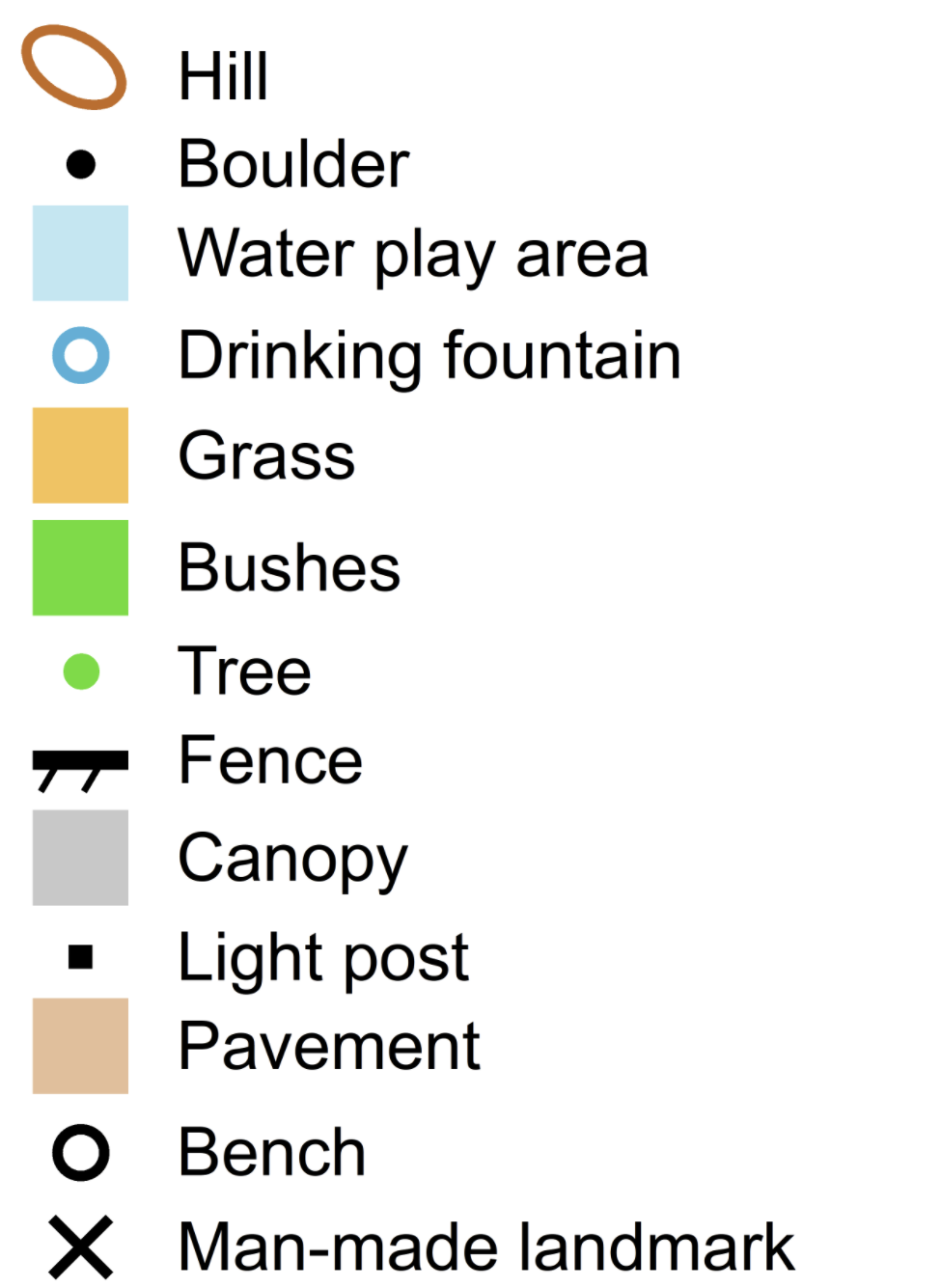
| Materials | Map legend (poster or handout), 2 sets of symbol cards (one per team), 2 sets of text cards (one per team) |
| Vocabulary | Symbol, Feature, Legend |
"Let's have some fun while learning orienteering symbols"
- Learning Goals
- How to Run It
- Reflection
- Script
- Vocabulary
- Related Activities
Learning Goals
Students completing this activity will be able to:
- Recognize common orienteering map symbols and name the features they represent
- Plan how you will do the activity before actually doing it
- Accept feedback from others and adjust your approach
- Give constructive feedback to teammates
How to Run It
Setup
- Print or prepare two sets of symbol cards and two sets of matching text cards. Each symbol card shows one map symbol; each text card names the feature (e.g., "fence," "path," "building")
- Place the symbol cards face up at the far end of the area, organized by team (left side, right side)
- Place the text cards face down next to the symbol cards for each team
- Post the map legend where both teams can study it before the relay begins
Steps
- Give teams a minute to study the map legend together. Encourage them to quiz each other on symbols before the relay starts
- One runner at a time goes to the card area. Pick up a text card, read it, find the matching symbol card, and bring both back to your team. Tag the next runner
- On "go," the first runner from each team sprints to the cards. They pick up one text card, find the symbol card that matches, and carry both back. The next runner goes immediately. Continue until all cards are collected
- After all cards are collected, the whole team reviews the matches together. If any pair is wrong, discuss what the correct match should be. Teams may send a runner back to swap cards if needed
- The leader checks each team's matches against the answer key. Award points for correct matches. Discuss any symbols that were tricky
Adaptations
Ways to adapt the activity to meet the needs of your students: slow things down, increase the challenge, or adapt for different learners
- Try Description Relay: use control description pictograms instead of map symbols (see Related Activities tab)
- Timed: time the relay and challenge teams to beat their own time in a second round
- Coach role: have one team member be the "coach" who can shout hints but not run
Tips
- Start with 8-10 common symbols for younger or newer groups; use 15-20 for experienced groups
- If one team finishes much faster, award bonus points for speed but also check accuracy. A fast team with errors scores less than a slower accurate team
- For a calmer version, skip the relay format and have small groups match cards together at their own pace
- This activity pairs well with Map Discussion or Symbol-O to reinforce the same symbols
Reflection
- How did you memorize the symbols?
- Did your team make a plan before starting? What was it?
- What was the hardest part about matching each symbol?
- If you made any mistakes, how did your team work together to fix them?
- Could you have worked better as a team? How?
Script
"We're going to race to learn our map symbols! Each team will send one runner at a time. When it's your turn, sprint to the cards, pick up a text card, and find the symbol card that matches. Bring both cards back and tag the next person."
"After all cards are collected, work together as a team to check your matches. You can fix any mistakes before we score."
Vocabulary
Symbol: A figure on the map that represents an object in real life. For example, a green circle means a tree, and the color blue means water.
Feature: A real-life object that can be shown as a symbol on a map. Fences, buildings, paths, and trees are all features.
Legend: A key that shows what each symbol on the map means. Also called a map key.
See the Glossary for all curriculum terms.
Related Activities
Description Relay (variation)
Run exactly like Symbol Relay, but the cards show control description pictograms (the IOF's standardized picture language for checkpoint locations) instead of map symbols. Good for groups that already know the basic map symbols and are ready for the next layer of orienteering literacy. Introduce a few pictograms before the first round so teams aren't guessing blind.