Star Relay — Activity
Team up; hand off between checkpoints
| Time | 30-60 minutes |
|---|---|
| Space | Schoolyard or local park |
| Materials | Orienteering flags, Regular course maps (1 per pair) |
| Vocabulary | Checkpoint, Leg |
"Partners take turns visiting checkpoints"
- Learning Goals
- How to Run It
- Reflection
- Vocabulary
- Related Activities
Learning Goals
Students completing this activity will be able to:
- Orient a map and understand how it represents the real course
- Use the map to plan your route
- Use simple strategies and tactics in following the course
- Move confidently and safely in open spaces
- Work cooperatively with and accept feedback from others
- Give feedback to peers
How to Run It
Setup
- Place checkpoints according to the all-checkpoints map
Steps
1. Pair up. Have students pair up for the activity.
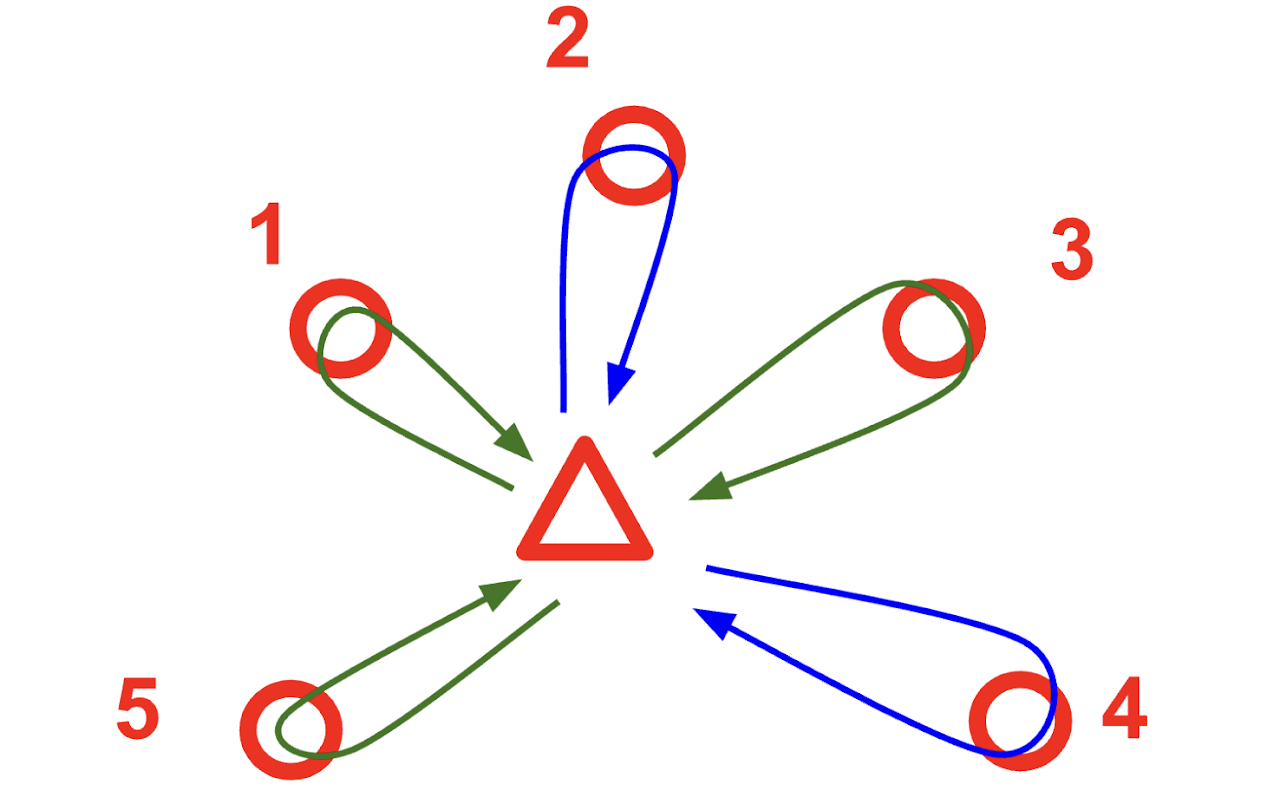
2. Star relay. First person goes to the first checkpoint, returns to start, and hands off to their partner. Visit checkpoints in order, switching runners between each one. Partners watch and make sure their partner visits the correct checkpoint. Runners report the code or animal at the checkpoint they visited.
3. Move the Object (variation). First person goes to the first checkpoint, leaves an object, and returns. Partner runs to that checkpoint, picks up the object and moves it to the next checkpoint, then returns to start to tag off. Repeat until the object is retrieved from the last checkpoint and brought back to the start.
4. Leave the Clothing (precision variation). One partner runs out and leaves a piece of clothing (hoodie, hat) where they think the checkpoint is. The partner then runs out to collect it and move it to the next checkpoint. If the first runner was not precise, the partner will not be able to find the clothing. This tests precision and leads to fun discussions about who was actually in the right spot.
Adaptations
Ways to adapt the activity to meet the needs of your students: slow things down, increase the challenge, or adapt for different learners
- Navigate by memory: leave the map at the start; runners must memorize which checkpoint to visit, then report the checkpoint code or animal to their partner to confirm they went to the right place
- Two checkpoints per turn: have each pair visit two checkpoints per turn instead of one
- Timed: add timing for a competitive element
- Electronic timing: use electronic timing to track completion times
- Try Compass Spider: add whited-out map sections that require compass navigation (see Related Activities tab)
Reflection
- How did you orient your map before heading to a checkpoint?
- How did you plan your route to the checkpoint and back?
- What strategy did you and your partner use to decide who ran which checkpoint?
- How did you move safely and confidently through open areas?
- Did your partner visit the correct checkpoints? What feedback did you give them?
- How did you use the time while your partner was running?
Vocabulary
Checkpoint: A marker placed at a specific location that participants must find using the map.
Leg: The section of a course between two consecutive checkpoints.
See the Glossary for all curriculum terms.
Related Activities
Compass Spider (variation)
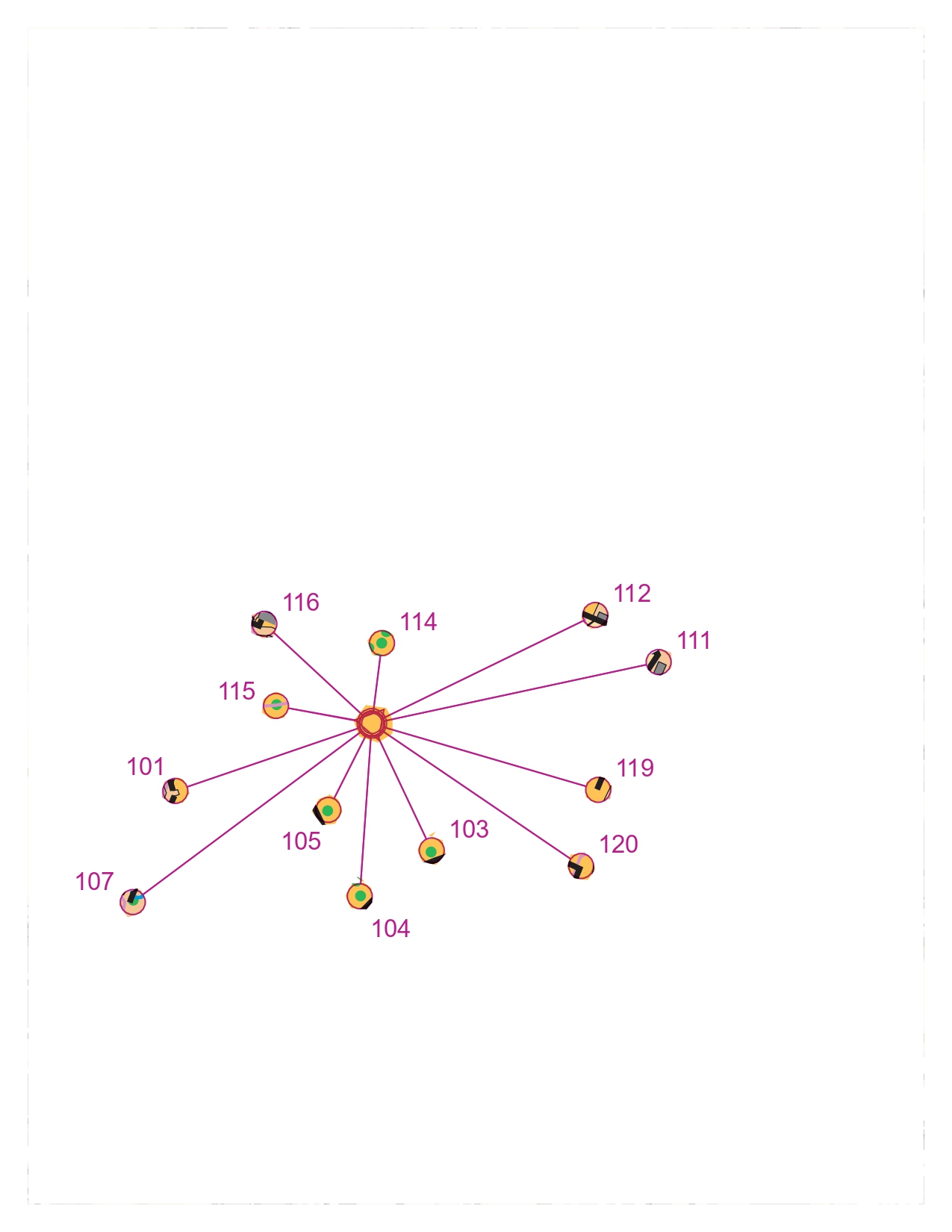
Star Relay with compass navigation. The setup is the same as Star Relay, but sections of the map between checkpoints are whited out (covered with paper or digitally removed before printing). Runners cannot see the terrain detail between the start and the checkpoint, so they must use a compass bearing to navigate there and back.
You can combine Compass Spider with regular Star Relay in one session: some checkpoints have the whiteout and some do not. This lets participants practice both map-based and compass-based navigation in the same activity.
Compass Spider works best after participants have practiced compass bearings (see Compass Basics).