Lesson 3: Route Choice
"You get to choose where to go and in what order"
| Time | 45-60 minutes |
| Space | Schoolyard or local park with an orienteering map |
| Materials | Orienteering maps with checkpoint circles marked, Checkpoint markers (cones or flags) with letter codes, All-checkpoints map, Scorecards and pencils, Poster-sized map with plastic cover for student course design (optional), Orienteering maps (one per student or pair), A planned route through varied features, Poison Score-O maps (1 per pair), Punch cards or index cards, Pencils |
| Setup | Place checkpoints according to the all-checkpoints map; spread them out across the mapped area |
| Vocabulary | Route choice, Score-O, Scorecard, Strategy |
Activities
warm-up
Map Walk
Warm up: quick map walk to review symbols and thumbing.

core
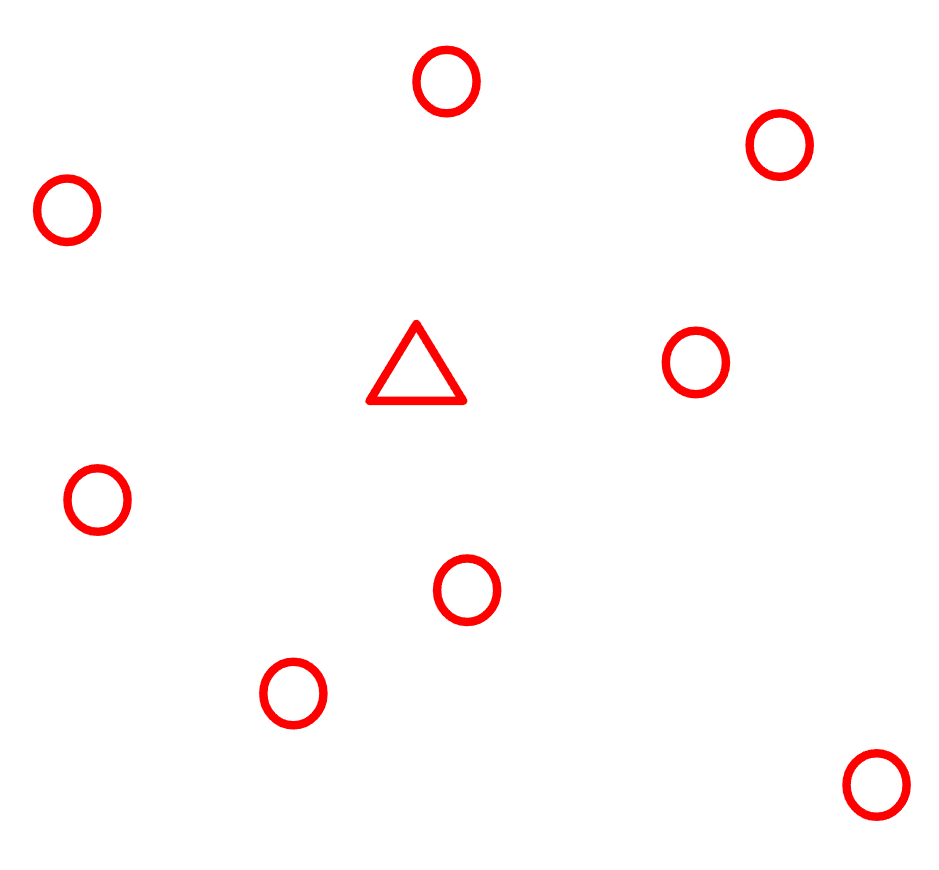
Score-O
Visit as many checkpoints as possible in any order.
extension
Poison-O
Score-O where wrong checkpoints lose points.
extension
Poker-O
Collect poker hands at checkpoints.
Goals
Orienteering Goals
- Plan a route through multiple checkpoints, choosing which to visit and in what order
- Navigate independently using an orienteering map
- Develop strategies for visiting the most checkpoints in the time allowed
- Read map symbols while moving through terrain
- Participate in course setup and cleanup (setup ladder)
PE Standards (SHAPE America)
Standard 2: Movement & Fitness Concepts
- Identifies the effective use of movement concepts within multiple dynamic environments (2.8.1). Students plan efficient routes between checkpoints during Score-O, considering distance and terrain.
- Demonstrates problem-solving skills in a variety of games and activities (2.8.7). Students develop strategies for grouping nearby checkpoints and avoiding backtracking.
Standard 3: Social Skills
- Uses communication skills to negotiate strategies and tactics in a physical activity setting (3.8.3). Partners discuss and negotiate which checkpoints to visit and in what order during Score-O.
- Demonstrates the ability to follow game rules in a variety of physical activity situations (3.8.6). Students return on the time signal, self-check using letter codes, and stay within the boundary.
- Recognizes and implements safe and appropriate behaviors during physical activity (3.8.7). Students navigate independently and stay aware of boundaries and other participants.
Standard 4: Personal Skills
- Connects how choice and personal interests impact individual engagement in physical activity (4.8.4). Students choose their own routes and strategies, discovering which approaches suit their strengths.
- Examines individual and group challenges through movement (4.8.5). Students debrief strategies between rounds and compare approaches with classmates.
See PE Standards alignment for the full framework.
Delivery
- Map Walk: quick warm-up route to review symbols and thumbing
- Score-O introduction: explain the format. Students visit checkpoints in any order within a time limit. At each checkpoint, record the letter code on the scorecard.
- Strategy discussion: "If you want to visit the most checkpoints, what would your plan be?" Discuss grouping nearby checkpoints, avoiding backtracking, saving far ones for last.
- Score-O: first round in pairs, 8-10 minutes
- Students orient their maps, plan a route, then go
- At each checkpoint, record the code and self-check: does the location match what the map shows? 🧭 Checking
- Debrief: compare strategies. Who found the most? What worked?
- Second round: individual, try to beat your first score
- Students run the setup (if time and readiness): for a third round, have students choose checkpoint locations on the all-checkpoints map and place the markers themselves. See Who does the setup? on the Score-O page.
Reflection
- What strategy did you use? Did you change it once you started?
- Which checkpoints were hardest to find? Why?
- How did you use the map to navigate between checkpoints?
- If you designed the course, how did you decide where to place checkpoints?
- What would you do differently next time?
Extensions
- Poison-O: add unmarked "poison" checkpoints that cost points. Rewards careful map reading.
- Poker-O: each checkpoint has a playing card; collect the best poker hand
- Assign point values: further or harder checkpoints worth more
- Late penalty: lose 1 point per minute past the time limit
- Full setup ladder: students design, set up, navigate, and clean up the entire course