Lesson 6: Race Day
"Run your own race"
| Time | 45-60 minutes |
| Space | Schoolyard or local park with an orienteering map |
| Materials | Orienteering maps with multiple course options (easy, medium, hard), Checkpoint markers with letter codes, Scorecards and pencils, Stopwatch or timing system, Start and finish markers |
| Setup | Set up courses of varying difficulty. Prepare a start area with maps face-down and a finish chute or line. |
| Vocabulary | Finish chute, Route choice, Split time, Mass start, Staggered start |
Activities
warm-up
Score-O
Warm up: quick Score-O round.

core
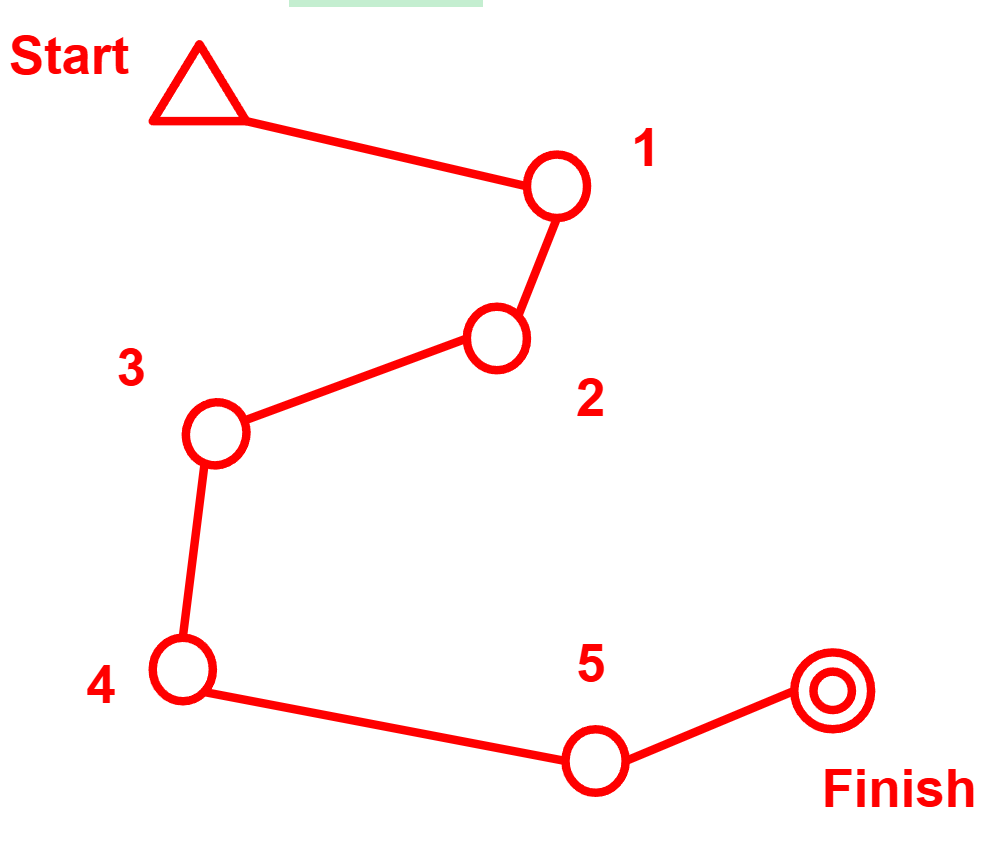
Point-to-Point
Timed courses with individual starts.
core
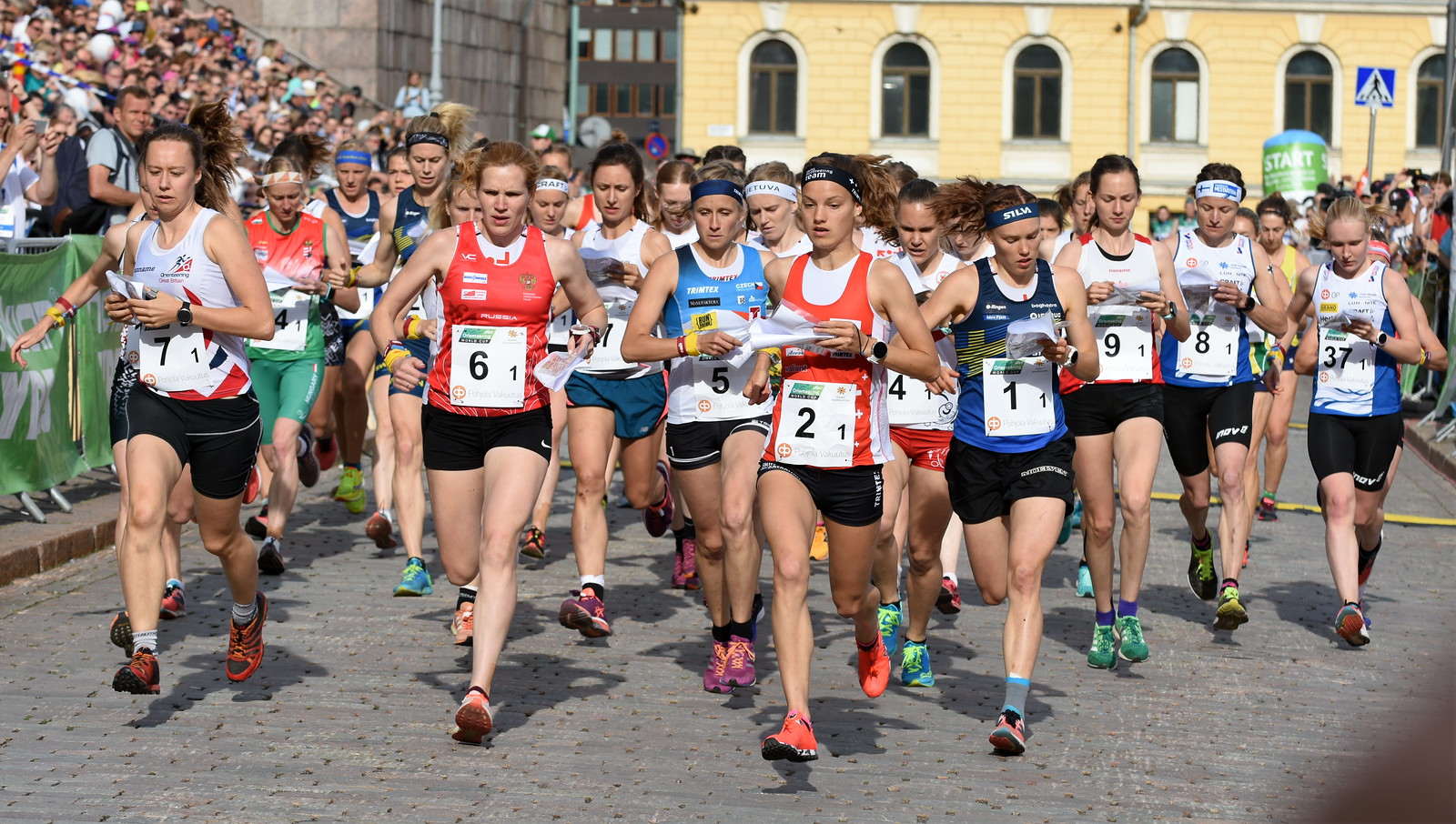
Relay Race
Teams compete in relay format.
Goals
Orienteering Goals
- Navigate a course independently under time pressure
- Choose an appropriate challenge level
- Manage the tension between speed and accuracy
- Work as a team in relay format
- Self-check at every checkpoint even under pressure. 🧭 Checking
PE Standards (SHAPE America)
Standard 1: Motor Skills
- Demonstrates correct technique in a variety of outdoor activities (1.8.1). Students run timed courses, balancing speed with accurate navigation.
Standard 2: Movement & Fitness Concepts
- Identifies the effective use of movement concepts within multiple dynamic environments (2.8.1). Students apply route choice and map-reading skills under time pressure during individual and relay races.
- Demonstrates problem-solving skills in a variety of games and activities (2.8.7). Students manage the trade-off between speed and accuracy, adjusting their approach between runs.
Standard 3: Social Skills
- Demonstrates consideration for others and contributes positively to the group or team (3.8.2). Students encourage teammates during relay races and respect staggered start procedures.
- Demonstrates the ability to follow game rules in a variety of physical activity situations (3.8.6). Students follow staggered start timing, self-check at each checkpoint, and report through the finish chute.
- Solves problems amongst teammates and opponents (3.8.8). Relay teams strategize about course assignments and support each other during transitions.
Standard 4: Personal Skills
- Connects how choice and personal interests impact individual engagement in physical activity (4.8.4). Students choose their course difficulty level based on their confidence and goals.
- Examines individual and group challenges through movement (4.8.5). Students reflect on the challenge of balancing speed with accuracy during timed races.
- Reflects on movement experiences to develop understanding of how movement is personally meaningful (4.8.9). Students compare their runs and discuss how racing added a new dimension to their navigation experience.
See PE Standards alignment for the full framework.
Delivery
- Score-O: quick warm-up round (5 minutes)
- Race format introduction:
- Today students run timed courses individually
- Explain the start procedure: staggered starts (one student every 30-60 seconds) so everyone navigates independently
- Explain the finish: run through the finish chute, time is recorded
- Emphasize: accuracy matters more than speed. A missed checkpoint means a disqualification. Self-check every time.
- Choose your course: offer easy (3-4 checkpoints), medium (5-6), and hard (7-8+). Students pick their level. Encourage trying the next level up from what feels comfortable.
- Individual timed runs: staggered starts
- Students pick up their map at the start (face down until their start time)
- Run the course, self-checking at each checkpoint
- Finish through the chute
- After finishing, students can review their route and wait for others
- Second run (if time): same course for a faster time, or try a harder course
- Relay Race: divide into teams of 3-4. Each team member runs a different course (or the same short course). When one finishes, the next starts. First team to finish wins.
- Cleanup: students help collect all checkpoint markers
Reflection
- How did racing change the way you navigated? Did you make different mistakes under pressure?
- Did you choose the right difficulty level? Would you go harder or easier next time?
- What was your strategy for balancing speed and accuracy?
- How did the relay feel different from individual racing?
- What would you tell a beginner about orienteering?
- What part of orienteering would you want to do again outside of class?
Extensions
- Track times on a leaderboard across sessions
- Handicap racing: harder courses get time bonuses
- Students design relay courses for each other
- Night orienteering with headlamps (if conditions allow)
- Introduce compass bearings for advanced navigation
- Connect to local orienteering clubs and events