Lesson 5: Course Navigation
"Follow the map from start to finish, choosing your own route between checkpoints"
| Time | 45-60 minutes |
| Space | Schoolyard or local park with an orienteering map |
| Materials | Orienteering maps with courses drawn (start triangle, numbered circles, finish double circle), Checkpoint markers with letter codes, Scorecards and pencils, All-checkpoints map |
| Setup | Place checkpoints and prepare maps with courses of varying difficulty (3-4 checkpoints for short, 6-8 for long) |
| Vocabulary | Checkpoint, Control description, Start triangle, Finish (double circle), Handrail, Attack point |
Activities
warm-up
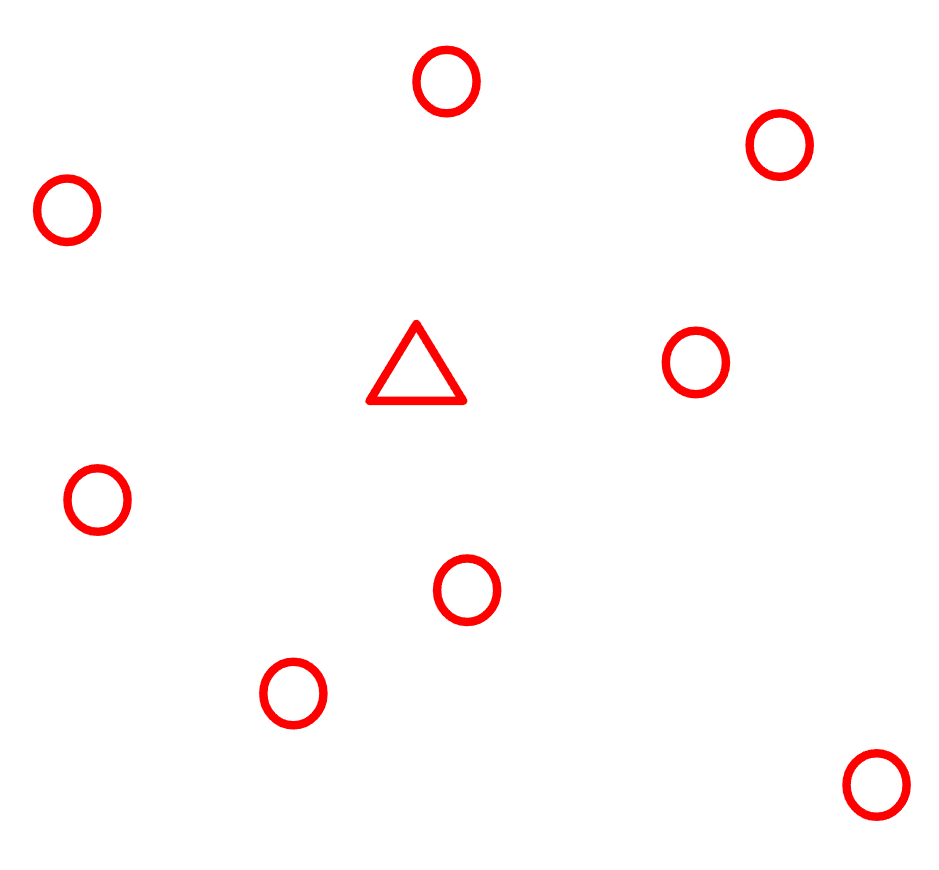
Score-O
Warm up: quick Score-O round.
core
Point-to-Point
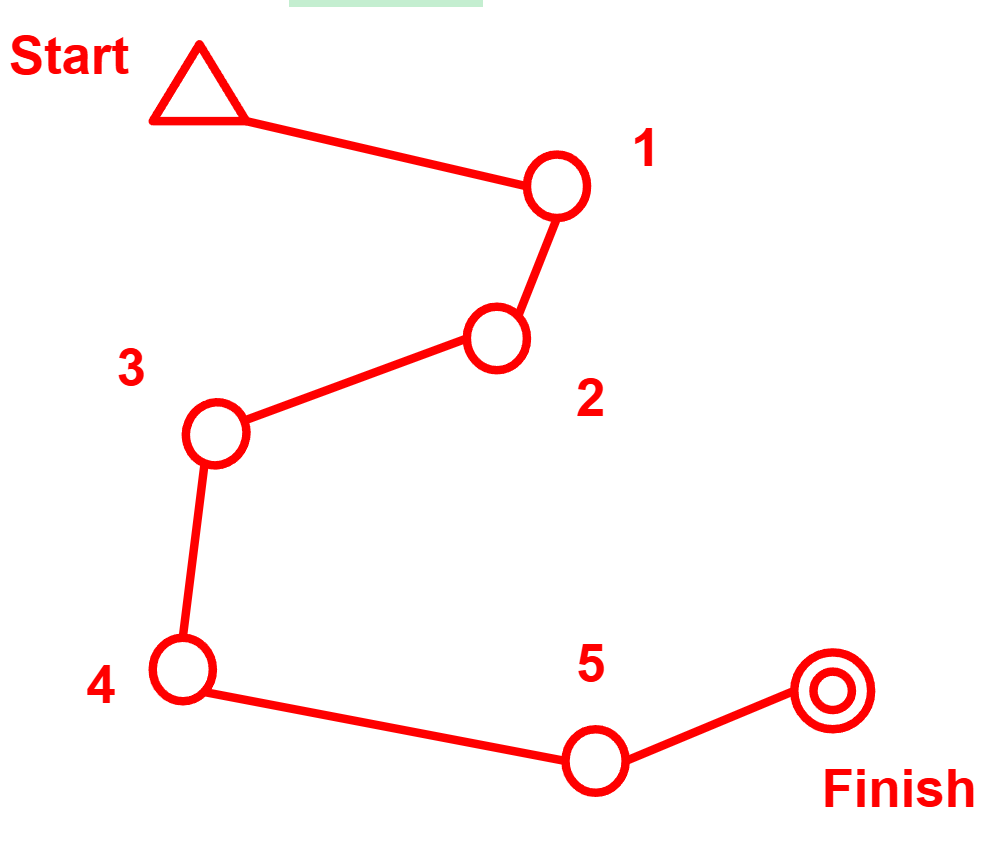
Navigate a course visiting checkpoints in order using a map.
Goals
Orienteering Goals
- Navigate a course visiting checkpoints in a specific order
- Read a course on the map: start triangle, numbered circles, finish
- Make route choices between checkpoints (handrails, attack points)
- Self-check at every checkpoint: read the code and confirm it matches. 🧭 Checking
- Compare route choices with others and learn from different approaches
PE Standards (SHAPE America)
Standard 1: Motor Skills
- Demonstrates correct technique in a variety of outdoor activities (1.8.1). Students run point-to-point courses, adjusting pace for terrain and maintaining map contact while moving.
Standard 2: Movement & Fitness Concepts
- Identifies the effective use of movement concepts within multiple dynamic environments (2.8.1). Students identify handrails and attack points to plan efficient routes between checkpoints.
- Demonstrates problem-solving skills in a variety of games and activities (2.8.7). Students choose between route options and adjust their plans when a chosen route proves difficult.
Standard 3: Social Skills
- Implements and provides constructive feedback to and from others (3.8.4). Partners compare marked maps after courses and discuss what route choices worked well or poorly.
- Recognizes and implements safe and appropriate behaviors during physical activity (3.8.7). Students navigate independently on solo courses, staying within bounds and self-checking at each checkpoint.
- Solves problems amongst teammates and opponents (3.8.8). Pairs discuss route choice trade-offs and learn from each other's navigation decisions.
Standard 4: Personal Skills
- Connects how choice and personal interests impact individual engagement in physical activity (4.8.4). Students select course difficulty based on their confidence and developing skills.
- Reflects on movement experiences to develop understanding of how movement is personally meaningful (4.8.9). Students compare route choices with others and reflect on how different strategies led to different outcomes.
See PE Standards alignment for the full framework.
Delivery
- Score-O: quick warm-up round (5 minutes)
- Introduce point-to-point: explain the course format
- Start triangle: where you begin
- Numbered circles: visit in order (1, 2, 3...)
- Finish (double circle): where you end
- At each checkpoint, read the code and confirm it matches your control description before moving on
- Introduce route choice vocabulary:
- Handrail: a linear feature (path, fence, stream) you can follow to get near a checkpoint
- Attack point: an obvious feature near the checkpoint that you navigate to first, then navigate carefully from there to the checkpoint
- Point-to-Point: progression
- Short course in pairs (3-4 checkpoints): navigate together, discuss route choices
- Longer course in pairs (6-8 checkpoints): more independence
- Solo course: do a course on your own. Self-check at every checkpoint.
- Route comparison debrief: after the solo course, pairs compare maps. "Show me the route you took between checkpoints 2 and 3. Why did you go that way? What would you try next time?"
Reflection
- How did you decide which way to go between checkpoints?
- Did you use any handrails or attack points? Which ones?
- Was it harder navigating in order than in any order (Score-O)? Why?
- What did you do when you got confused or lost?
- What was different about going solo versus with a partner?
- What would you do differently on your next course?
Extensions
- Time students on the same course and track improvement
- Students design their own courses for classmates
- Challenge students to complete a course from memory
- Introduce control descriptions with feature codes (e.g., "boulder, north side")
- Add compass bearings between checkpoints