Lesson 1: Know Your Space
"In orienteering, you go out and you come back"
| Time | 30-45 minutes |
| Space | Gym, schoolyard, or local park |
| Materials | Cones (optional, for marking boundaries), Whistle or flag, Cone or marker for the Start, Checkpoints (cones with animal pictures) |
| Setup | Walk the space and identify the boundary; place cones if edges are unclear; place a Start marker; place animal checkpoints around the space |
| Vocabulary | Boundary, Checkpoint, Start, Gathering signal |
Activities
core
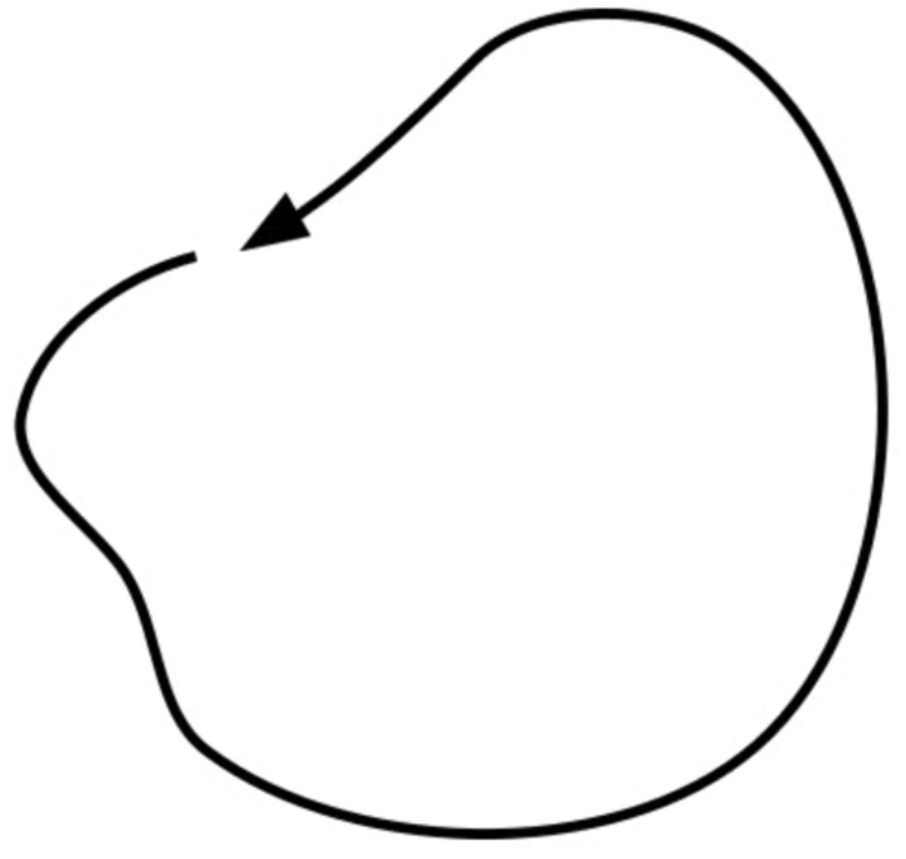
Boundary Run
Run the boundary; discuss inside/outside.
core
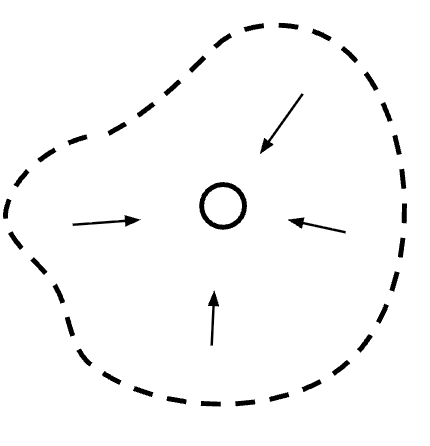
Gathering
Move freely; return to the Start on the teacher's signal.
core
Explore & Find
In pairs, explore to find animal checkpoints.

Goals
Orienteering Goals
- Identify the boundary of the play area
- Tell whether landmarks and locations are inside or outside the boundary
- Recognize areas within the boundary that are still off limits
- Know where the Start is from anywhere in the boundary
- Respond quickly to the gathering signal
- Explain why boundaries matter for safety and respect
- Explore a space and find checkpoints within the boundary
- Describe what you found and where it was, using spatial language
- Begin building spatial memory of checkpoint locations
- Work with a partner
PE Standards (SHAPE America)
Standard 1: Motor Skills
- Combines varied locomotor skills in a variety of practice tasks (1.5.1). Students walk, jog, and sprint during Boundary Run and Explore & Find.
Standard 2: Movement & Fitness Concepts
- Applies movement concepts and strategies for safe movement within dynamic environments (2.5.1). Students navigate within the boundary and adjust their movement to avoid collisions during Explore & Find.
Standard 3: Social Skills
- Demonstrates safe behaviors independently with limited reminders (3.5.4). Students stay within the boundary and respond to the gathering signal independently.
- Solves problems independently, with partners, and in small groups (3.5.5). Pairs work together during Explore & Find to locate animal checkpoints and report their findings.
Standard 4: Personal Skills
- Recognizes group challenges through movement (4.5.5). Students time their response to the gathering signal as a group and work to improve it.
See PE Standards alignment for the full framework.
Delivery
- Boundary Run: run the boundary together; point out key landmarks
- Quiz: point to landmarks and ask "inside or outside?"
- Discuss off-limits areas within the boundary (gardens, parking lots)
- Establish the Start with a flag or cone. Students walk to different spots. Can they point to the Start from where they are?
- Gathering: students move freely within the boundary; return to the Start on the signal; count how many seconds it takes
- Repeat: spread out further each time. Can the whole class beat their previous time?
- Explore & Find: explore within the boundary to find animal checkpoints; return on the gathering signal
- Report back: which animals did you find? Where were they? ("The elephant was near the fence." "The giraffe was in the far corner.") Build a group picture of the space. Optionally, have a student run out, touch an animal marker, and run back. Extend by naming two animals and having them visit those two in order and back. This previews the sequencing in Animal-O.
- Send out again. Can you find more this time? Can you remember where the ones you've already seen are?
Orienteering connection: In competitive orienteering, every course has a time limit. If you're not back by the cutoff, you're disqualified. Orienteers also learn a safety bearing: a compass direction that will always bring you back to a road or known feature. Today, the gathering signal is your safety bearing.
Reflection
- What does boundary mean?
- How can crossing the boundary be dangerous?
- What are some things we see every day that mark boundaries? (Fences, curbs, signs)
- How did you know where the Start was?
- Was it harder to return from far away? What helped?
- How many animals did you find? Which was the hardest to find?
- Where were the animals? Can you describe where each one was?
- How did you work with your partner?
Extensions
- Repeat the boundary at a faster pace
- Travel the boundary with different movements (skipping, galloping)
- Hot or Cold: direct a partner to a secret cone using temperature clues
- Shrinking Boundary Tag: play tag while the boundary gets smaller
- Capture the Flag: two teams with separate territories; cross the boundary to grab the flag
- Use a different signal (visual only, varied sounds)
- Time the group gathering; try to improve over several rounds
- Move the Start to a new location; reset and find it again
- Move the checkpoints to new locations and explore again
- Have students draw a map of the area and checkpoint locations